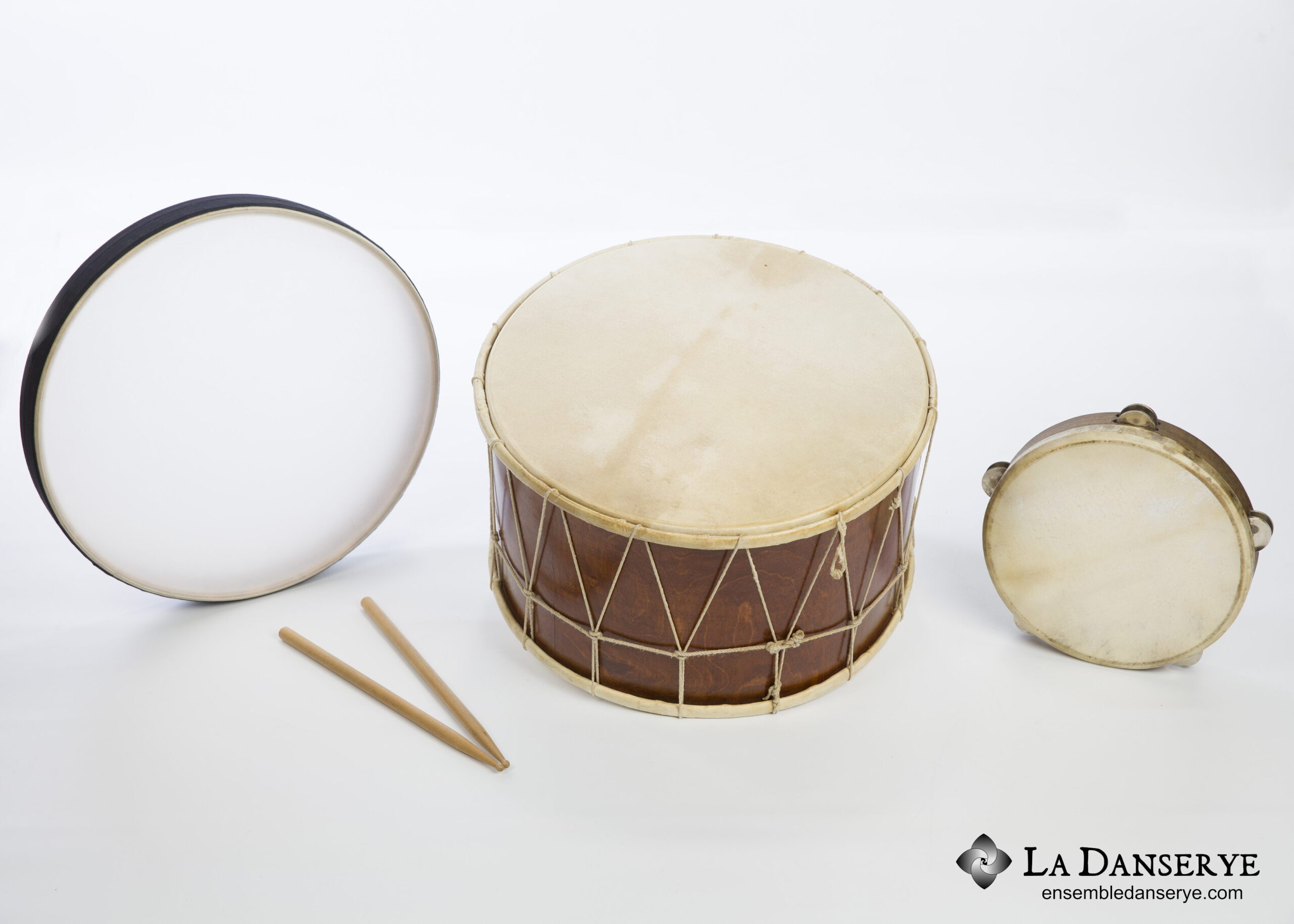
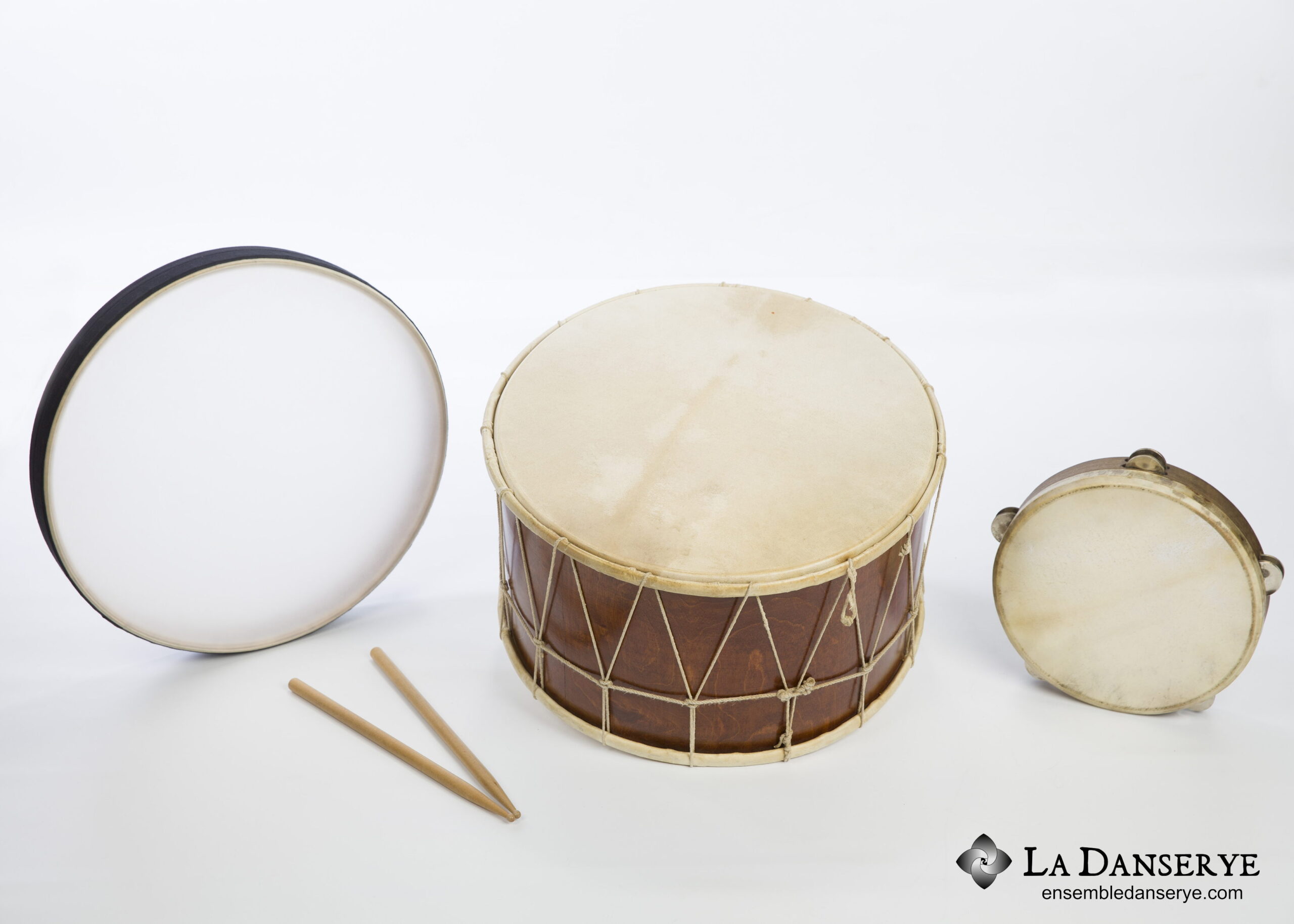
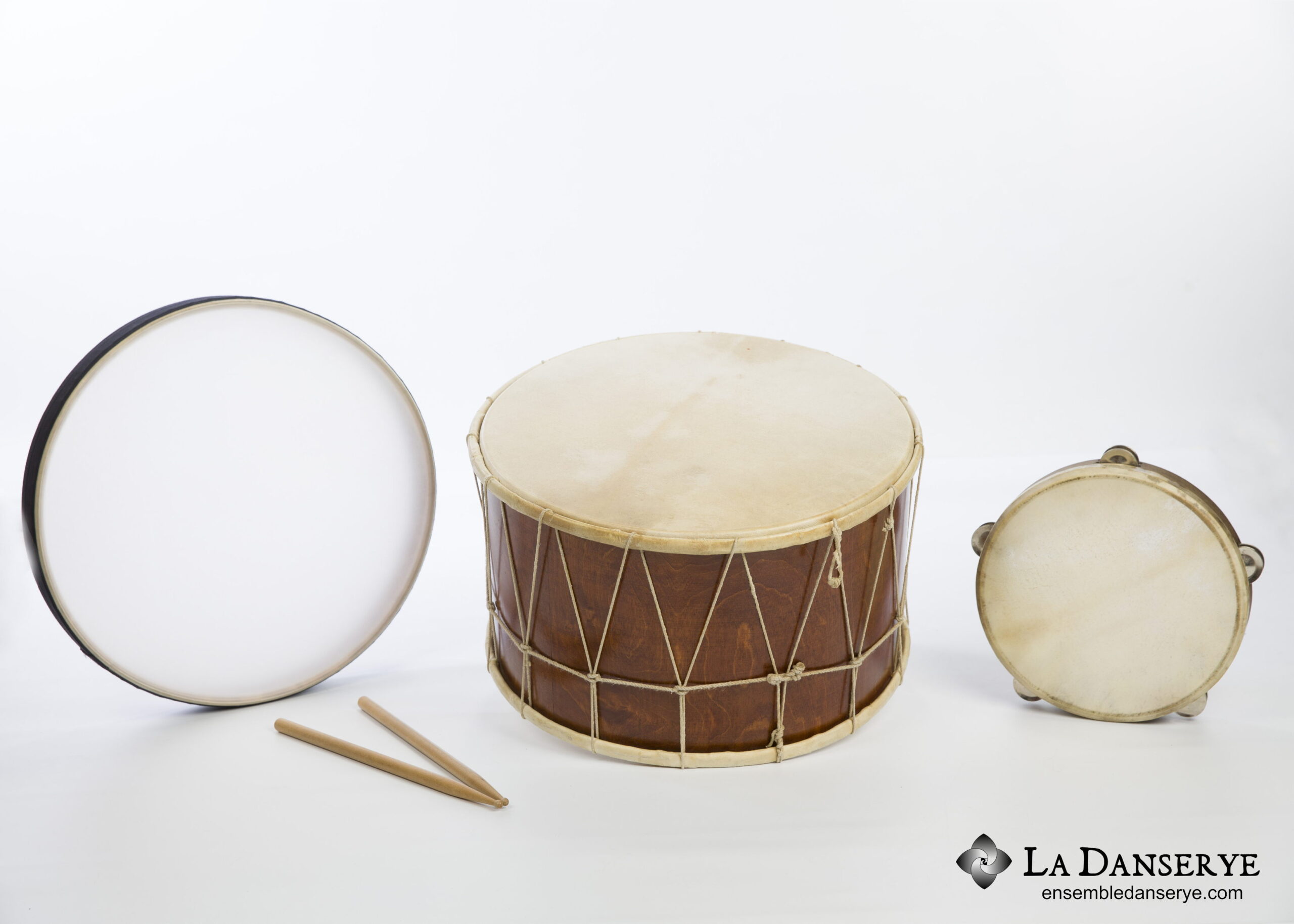
The use of percussion has varied throughout history, involving a wide range of artifacts with diverse purposes and intentions. In the case of early music, percussion was commonly used, often without a particular justification, especially in secular music. In the 16th century, percussion instruments were already depicted in Virdung’s treatise (Musica Getutschst, 1511), where examples of kettledrums and timpanis are illustrated.
In sacred music, the use of percussion instruments is more debated, as there are no explicit references to their use. Only during major festivals and processions did the establishment of trumpets and kettledrums typically participate. Iconographic evidence is also scarce in this regard, though somewhat more abundant in secular music. The use of other percussion instruments, especially those with jingles, is even more controversial due to the absence of sources. However, the tradition of using tambourine-like instruments is justified by the use of Eastern instruments like the riq. Additionally, tambourines have also been traditionally used in Europe due to Arab influence.
Manufacturers and instruments
Victor Barral
Drum based on a 16th-century European model, Madrid (Spain) ***** 2002
Traditional Arabic riq, Madrid (Spain) ***** 2002
Traditional Arabic riq, Madrid (Spain) ***** 2004
Traditional Arabic tambourine, Madrid (Spain) ***** 2002