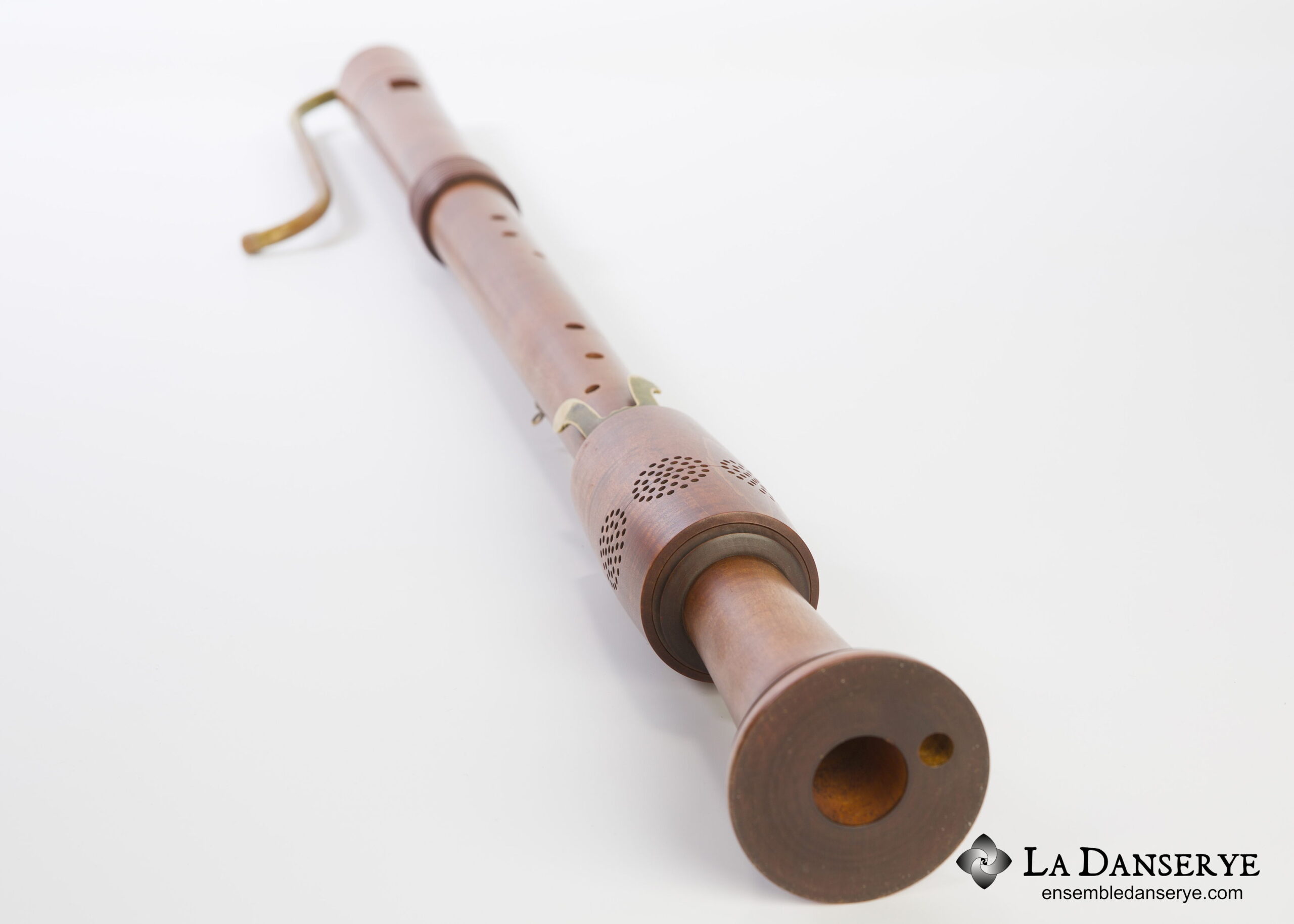
The recorder is one of the oldest wind instruments in existence and represents the culmination of the evolution of popular instruments like whistles over centuries. The method of producing sound involves a system composed of an air channel directed towards a sharp edge, which cuts the air to generate sound. The recorder has undergone various stages of evolution, and it can be said that by the Middle Ages, it had become an instrument capable of playing all notes and making music together with other instruments and voices.
A very well-known and ordinary musical instrument, it is a piece of round, hollow wood with a certain number of holes that are covered with the fingers. Blowing into the top, which has an elongated hole with a tongue, changing the fingers by covering and uncovering the holes, it produces various sweet and peaceful sounds. Sebastián de Covarrubias, Tesoro de la Lengua Española o Castellana, 1611.
In the 16th century, the use of recorders began to be established in sacred music, where it became one of the sets of instruments used by salaried minstrels in Spanish cathedrals. There are numerous references in chapter records regarding the use of recorders directly or indirectly, noting payment orders for instruments or some regulation concerning where to store the instruments. Occasionally, it is specified that the minstrels should play the recorders at a certain point during the service to create a different sound atmosphere.
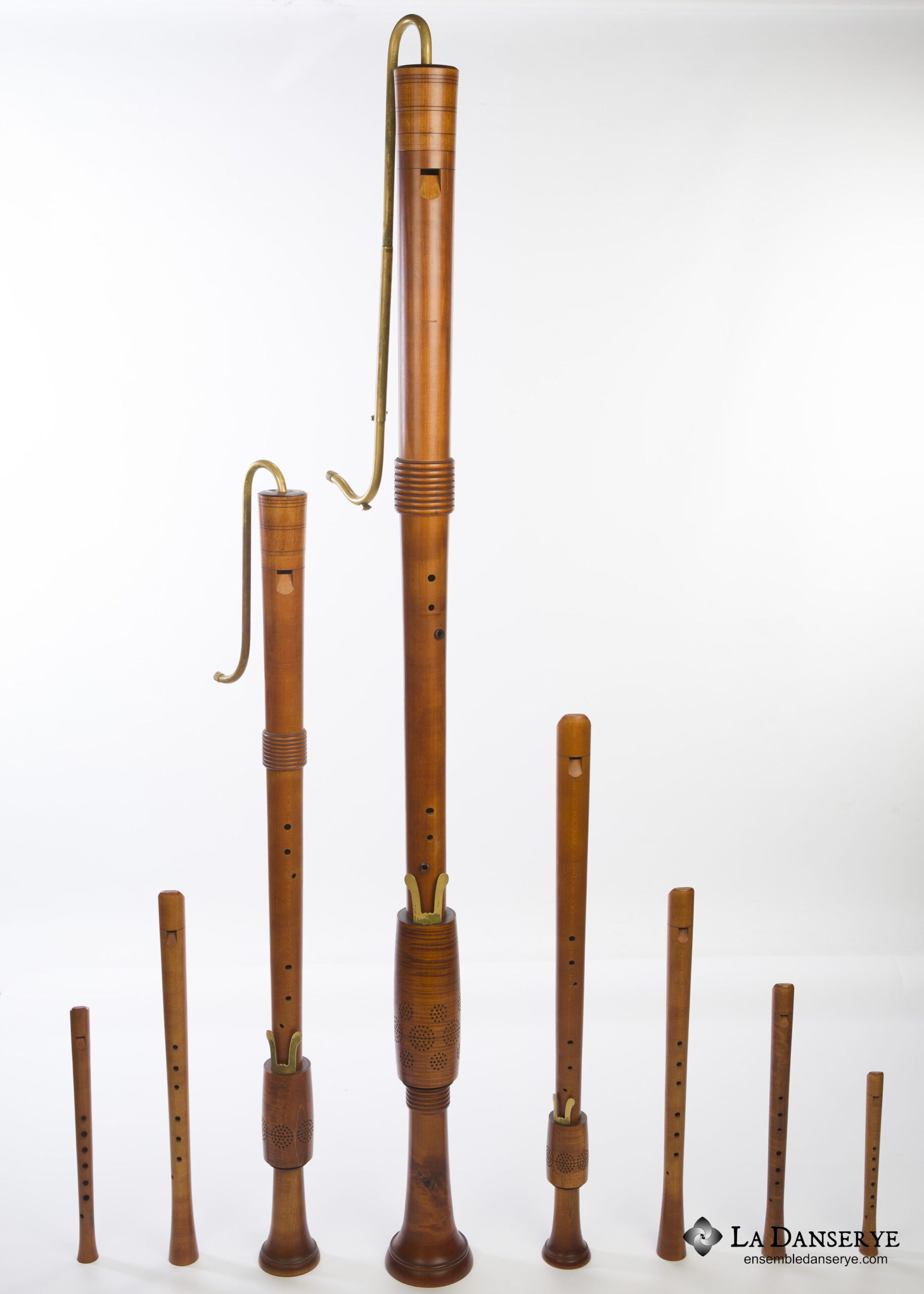
Like all Renaissance instruments, recorders were also built in families, which in the case of Praetorius (Syntagma Musicum II, 1619) included up to 8 instruments, ranging from the lowest recorder (about 2 meters tall) to the smallest (14 cm). In the ecclesiastical context, they were played as a pure combination, that is, as an ensemble. However, outside this context and in 17th and 18th-century music, they became instruments that developed soloist capabilities.
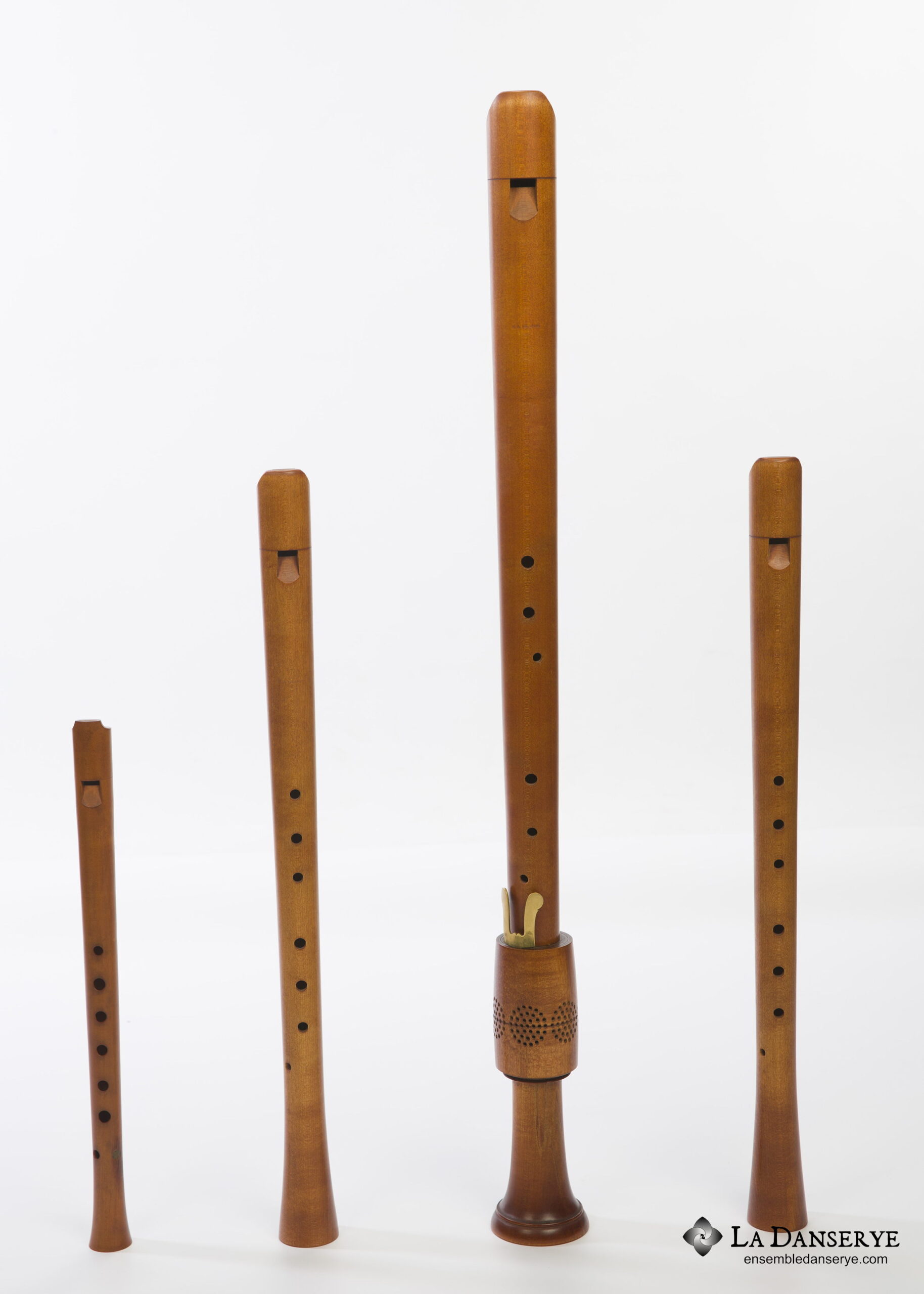
Alto recorder in G and F, model based on SAM 135 from the Kunsthistorisches Museum in Vienna, 440 Hz., Calasparra (Murcia) ***** 2004-2005
Adriana Breukink
Set of recorders (soprano in C, alto in F, tenor in C, tenor in C, bass in F, contrabass in C, subbass in F), based on Bassano instruments from the Kunsthistorisches Museum in Vienna (16th century), 465 Hz., Enschede (Netherlands) ***** 2011