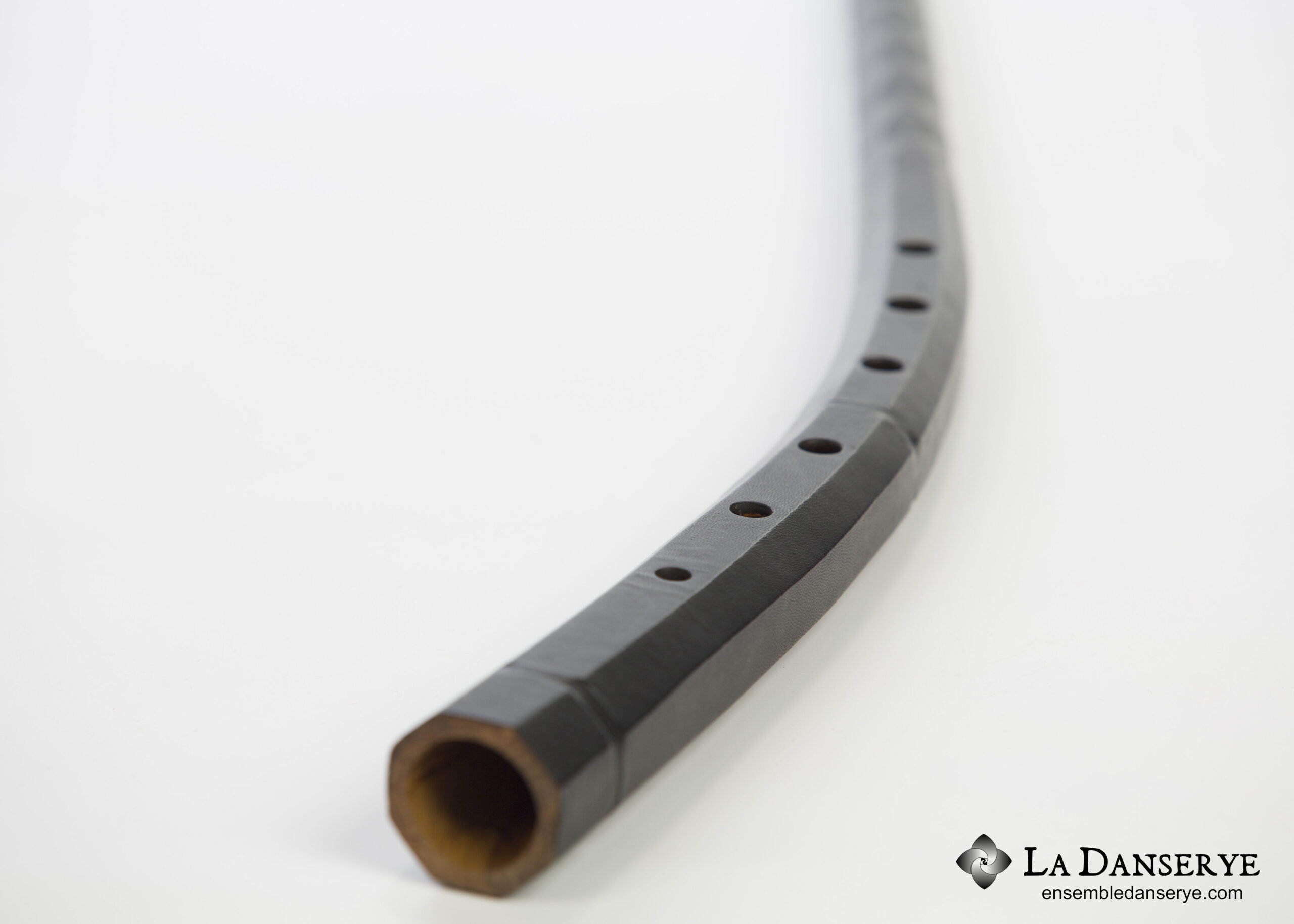
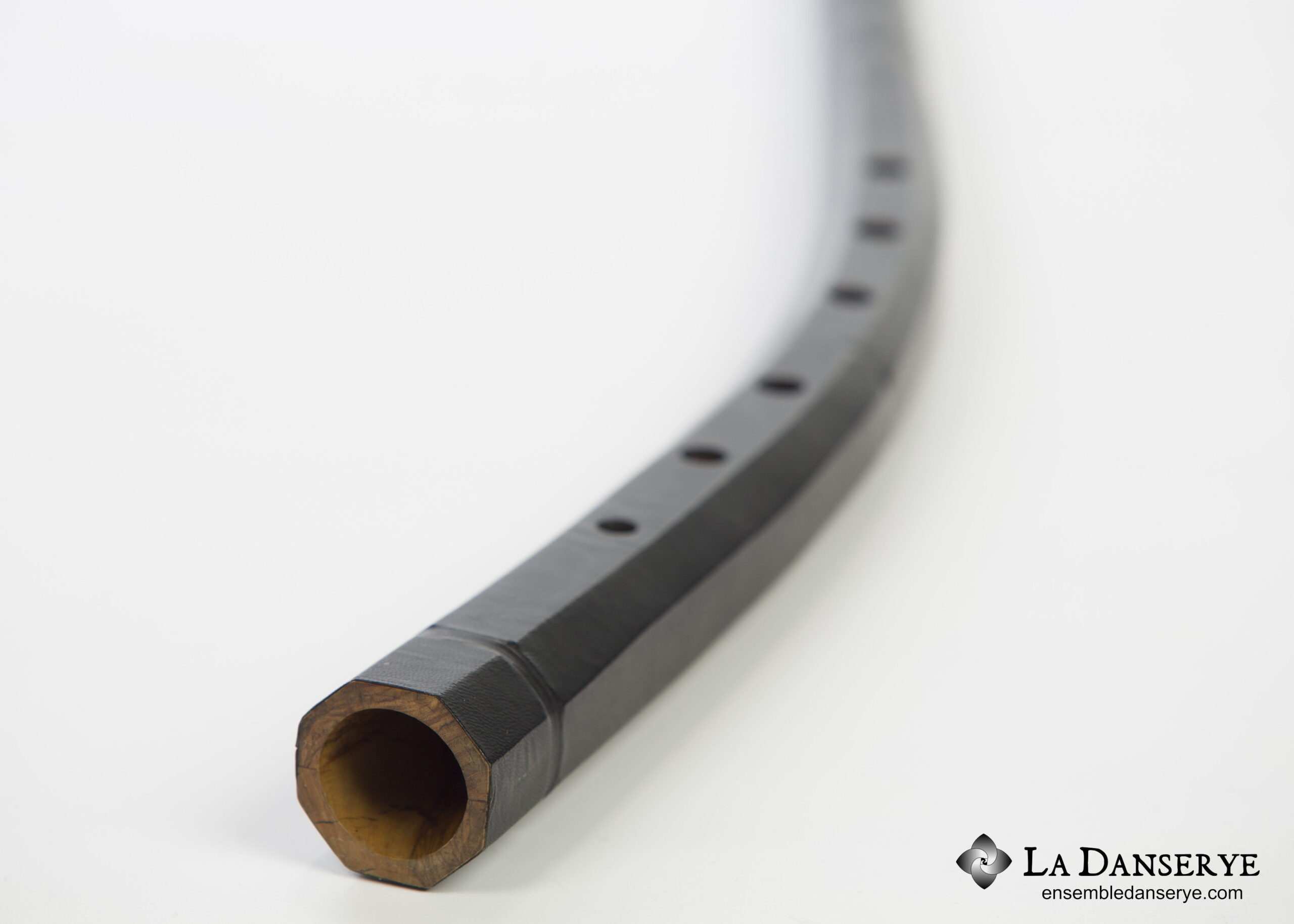
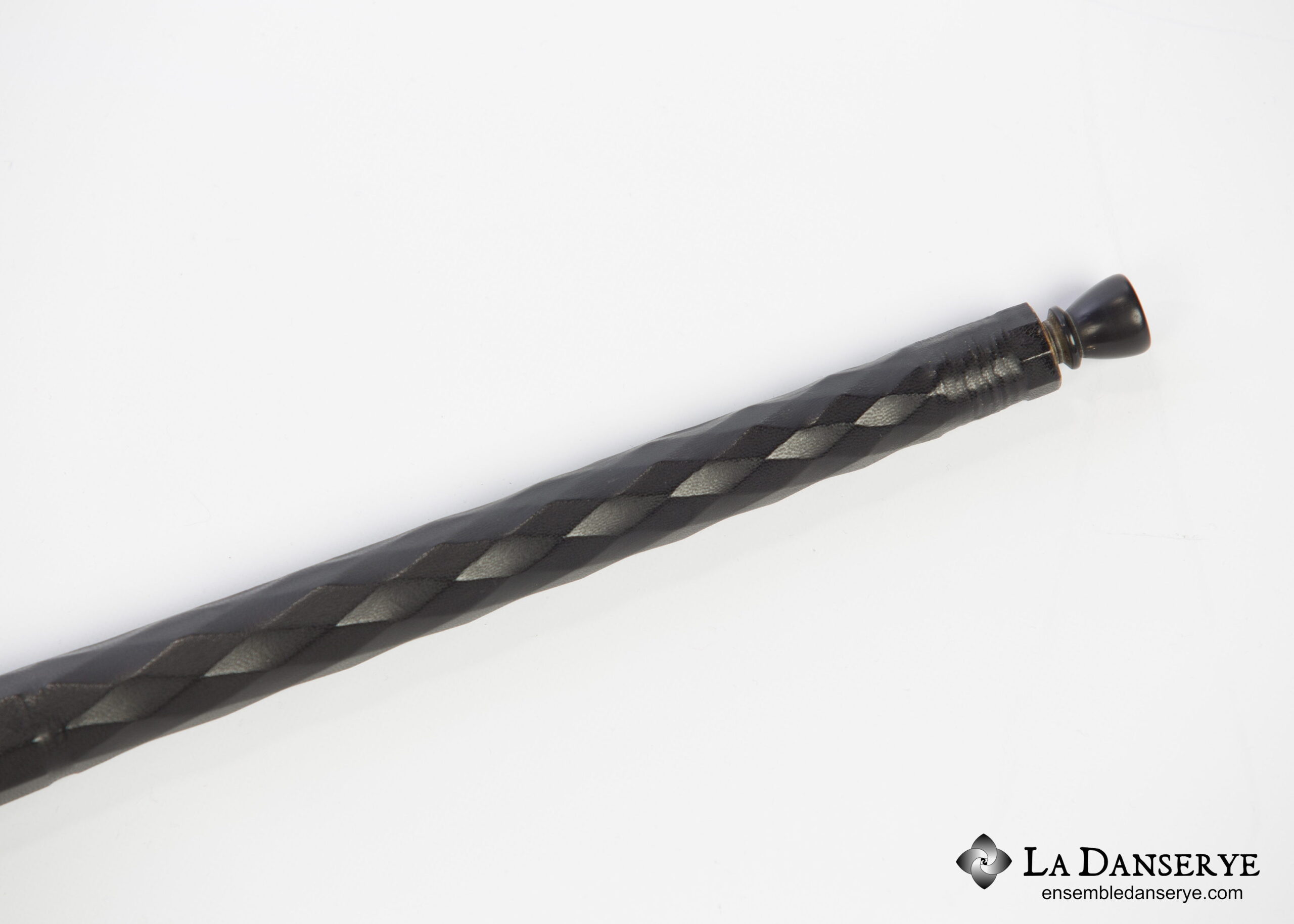
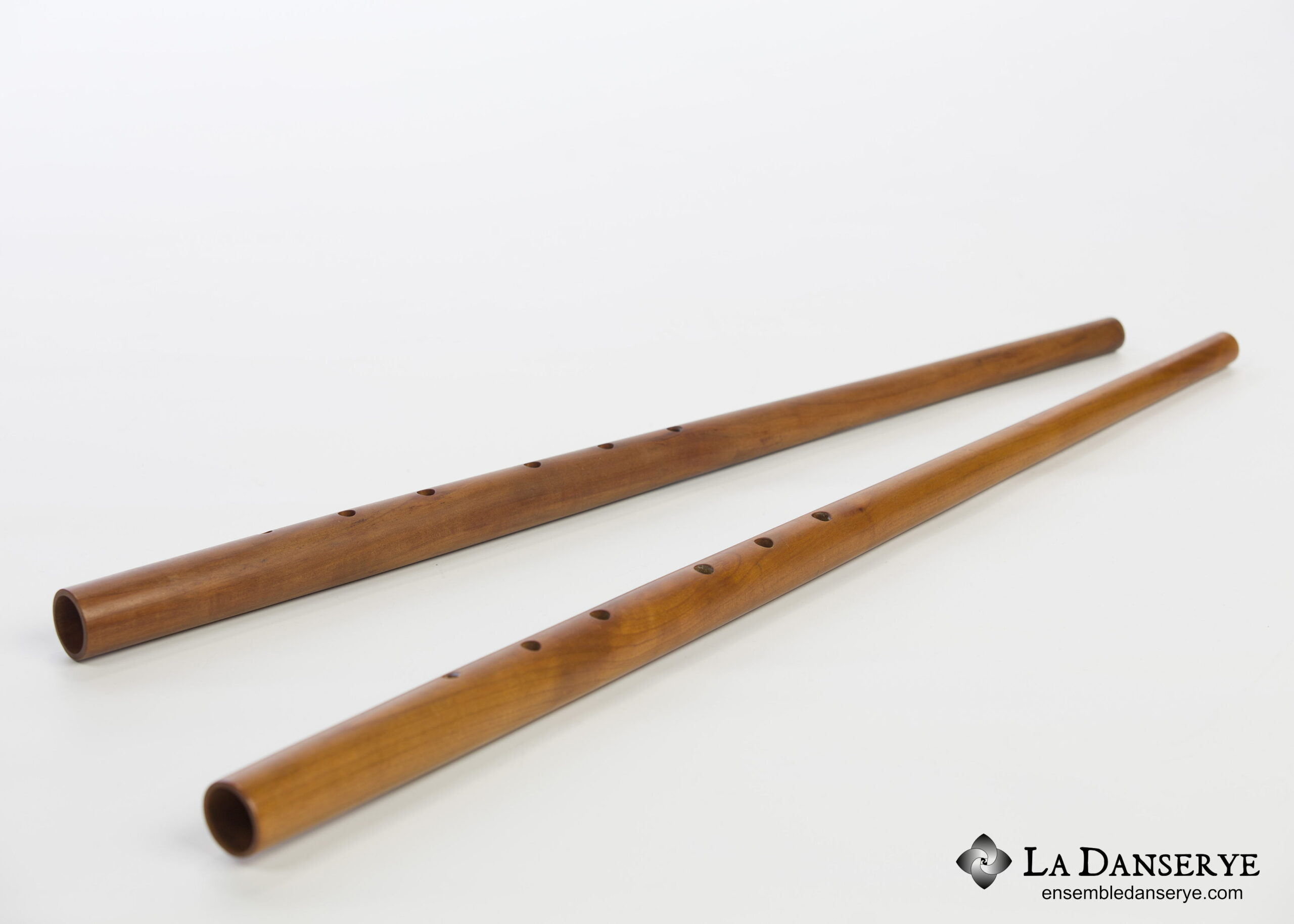
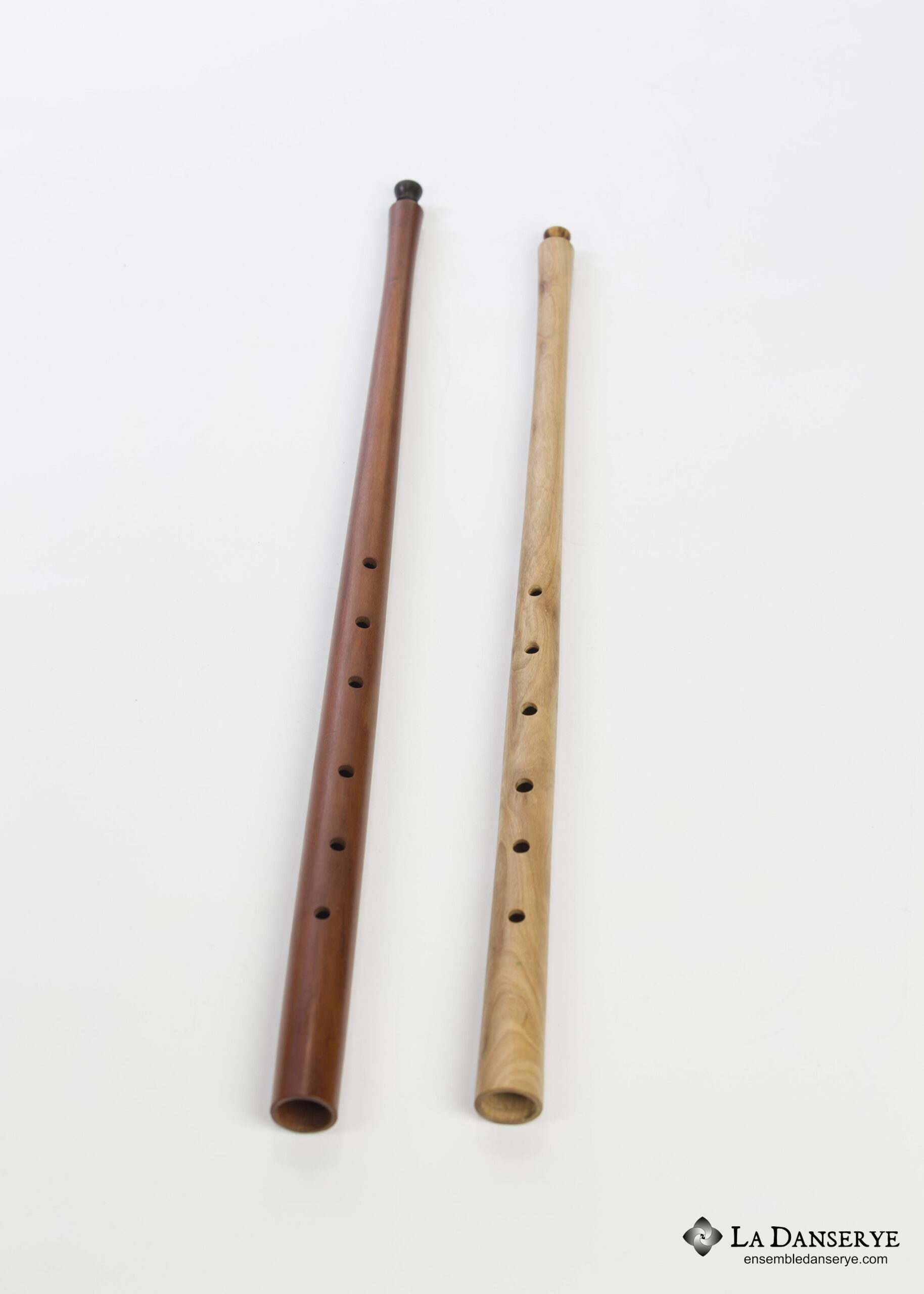
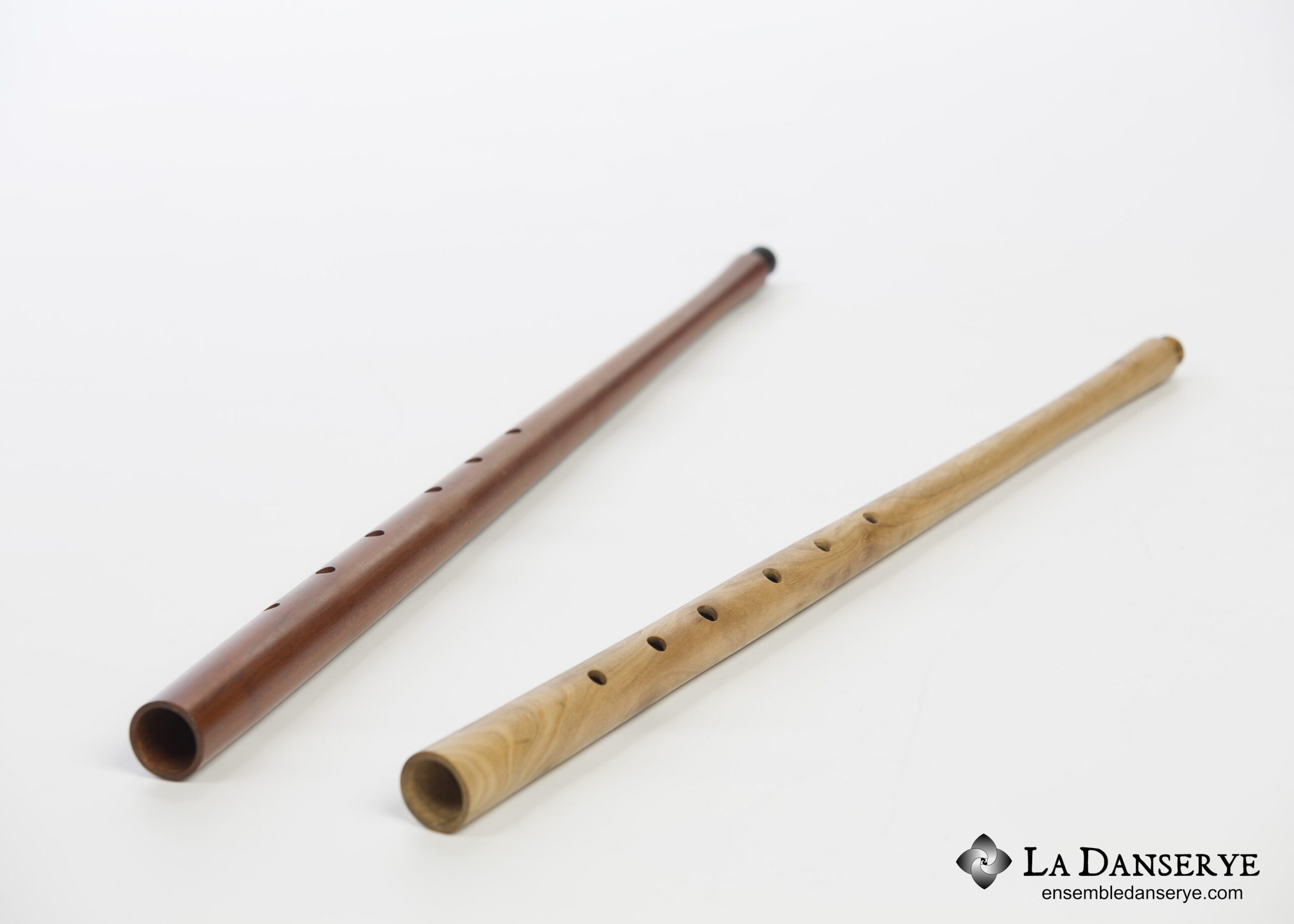
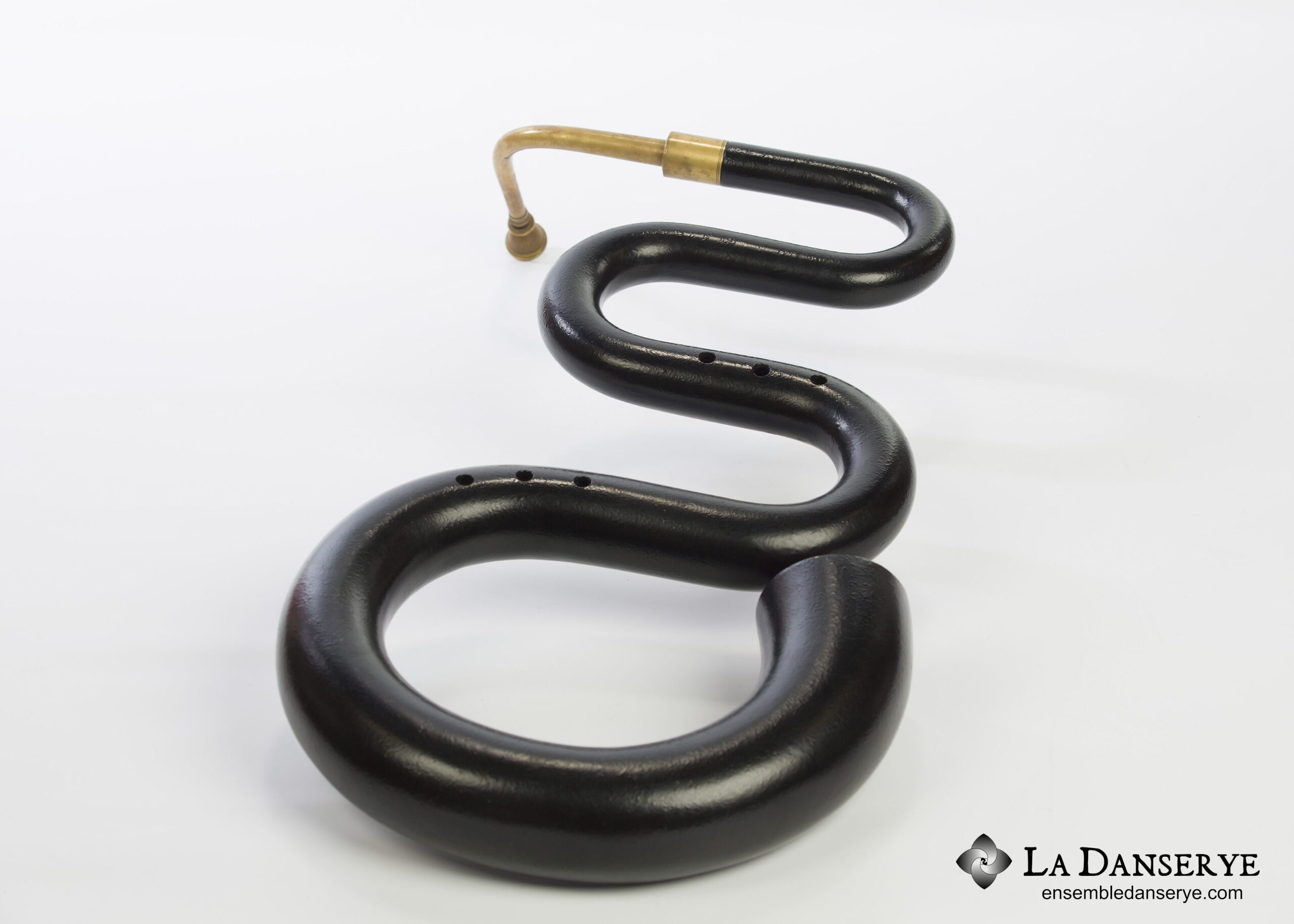
The renaissance cornet is an instrument that emerged and developed during the Renaissance, reaching its peak in late 16th century and early 17th century Italy, with the Venetian school led by Giovanni Gabrieli and Claudio Monteverdi. It is an instrument that possesses an excellent vocal quality, making it ideal for doubling the human voice, especially in the soprano range. It was used dazzlingly in its time and has perhaps been one of the most difficult wind instruments to play in the history of wind instruments.
A musical instrument played with the mouth in music chapels, along with other instruments of this type and others. This name was given because it is somewhat curved, almost resembling a bull’s horn. Sebastián de Covarrubias, 1610.
During the 16th and 17th centuries, there were mainly three types of cornets: the black cornet (cornetto nero, cornet à bouquin, cornet), the mute cornet (cornetto muto, cornet muet, mute cornet) and the straight cornet (cornetto diritto, straight cornet).
The black cornet, as the curved cornet was called, was named so because it was covered in leather (parchment) dyed black, which was used to protect, give consistency and durability to the wood. On the other hand, the mute cornets were straight, with a carved mouthpiece that could not be separated. This name referred to the sweetness of its sound, which was very suitable for playing with voices and with softer instruments such as recorders or sets of bowed viols with harps, for example. These cornets were also called white cornets because they were made from light-toned woods (usually boxwood) or, in some cases, ivory and without any coating.
The bassoons, cornets, and shawms were invented to join with natural voices, and all made one body, as experienced in the musicians’ chapels. Pablo Nasarre, Escuela Música, 1724.
The straight cornet also has a straight development, as its name indicates, but unlike the mute cornet, it does not have a carved mouthpiece but consists of a separate piece similar to that of the curved cornet. However, it is also not covered with leather, and its external appearance resembles that of a mute cornet.
Like all families of Renaissance instruments, the cornet also had a defined family, ranging from a “sopranino” instrument, which was the cornettino, the cornet, the alto cornet, the tenor cornet and more rarely, the bass cornet.