
Performance Practice
One of the primary objectives of La Danserye is the reconstruction of the sound of wind bands, starting from the 15th century and extending almost to the 18th century, with a focus on the 16th century. This approach presents a significant challenge for musicians who seek to recover or approach this world today. After more than four centuries, there are so many unknowns about various musical aspects that it seems impossible to achieve any type of reconstruction that approximates a sound world that appears distant, imprecise, and heavily biased.
Today, through rigorous research and close collaboration with specialized musicologists, we have some data regarding the number of wind players (ministriles) that existed (when linked to sacred institutions), the instruments they played, and even ceremonial or practical aspects about the places where they performed their functions or the parts of the services in which they participated. The study of existing documentary sources, and in some cases, references to performed musical practices, allows us a relatively precise approach to the musical universe of these groups of ministriles and their particular functioning in specific geographic cases.
Instruments and Instrumental Combinations
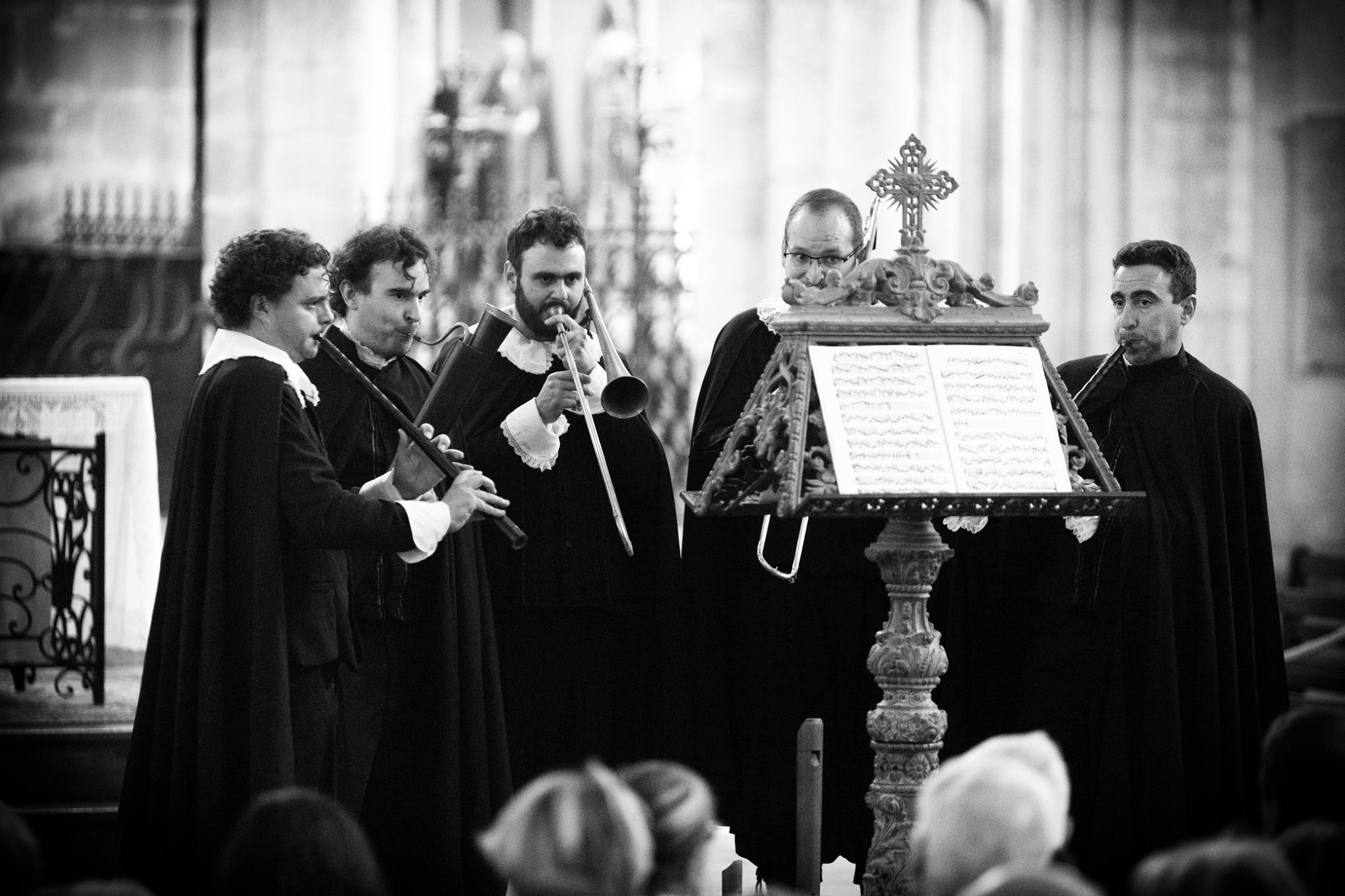
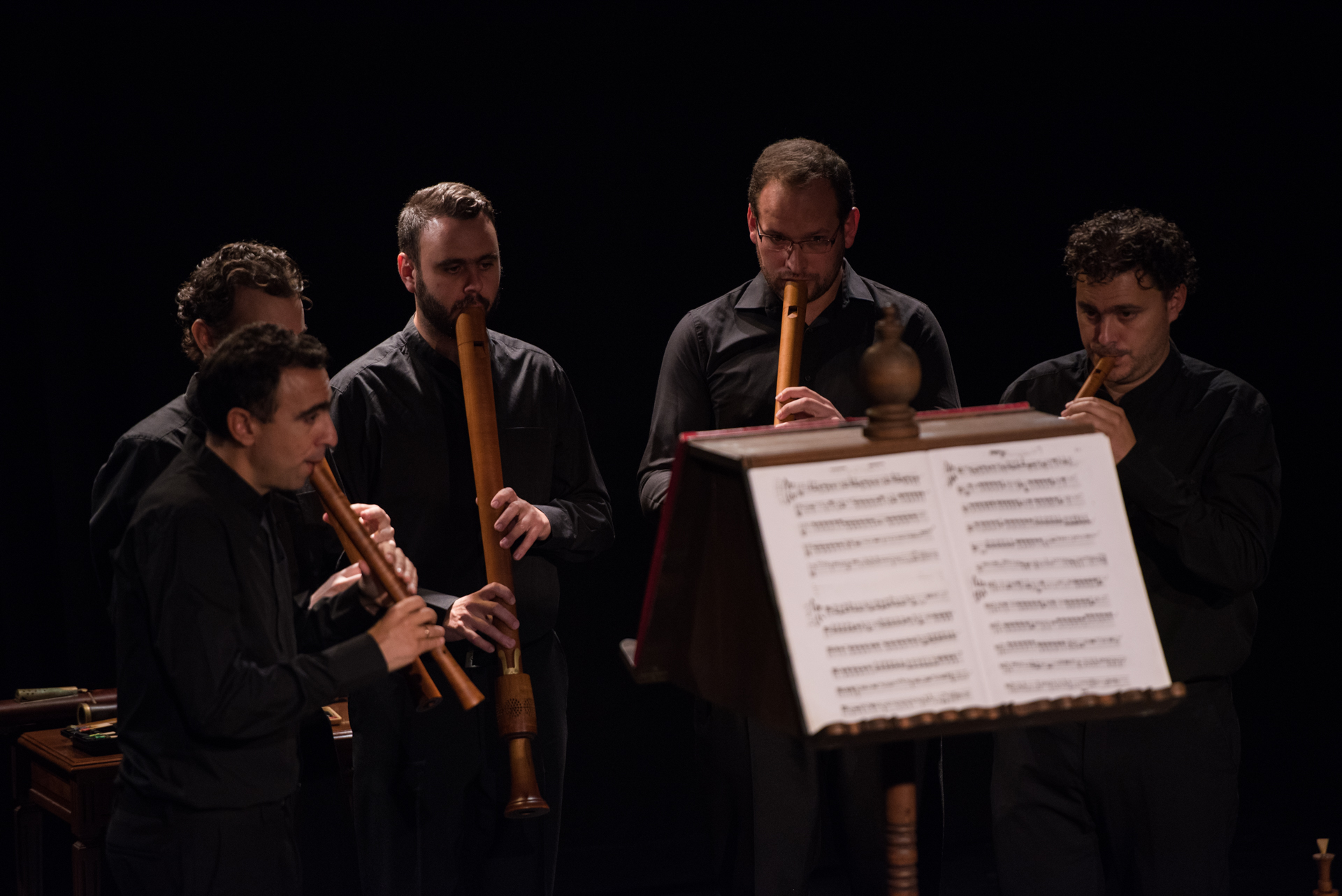
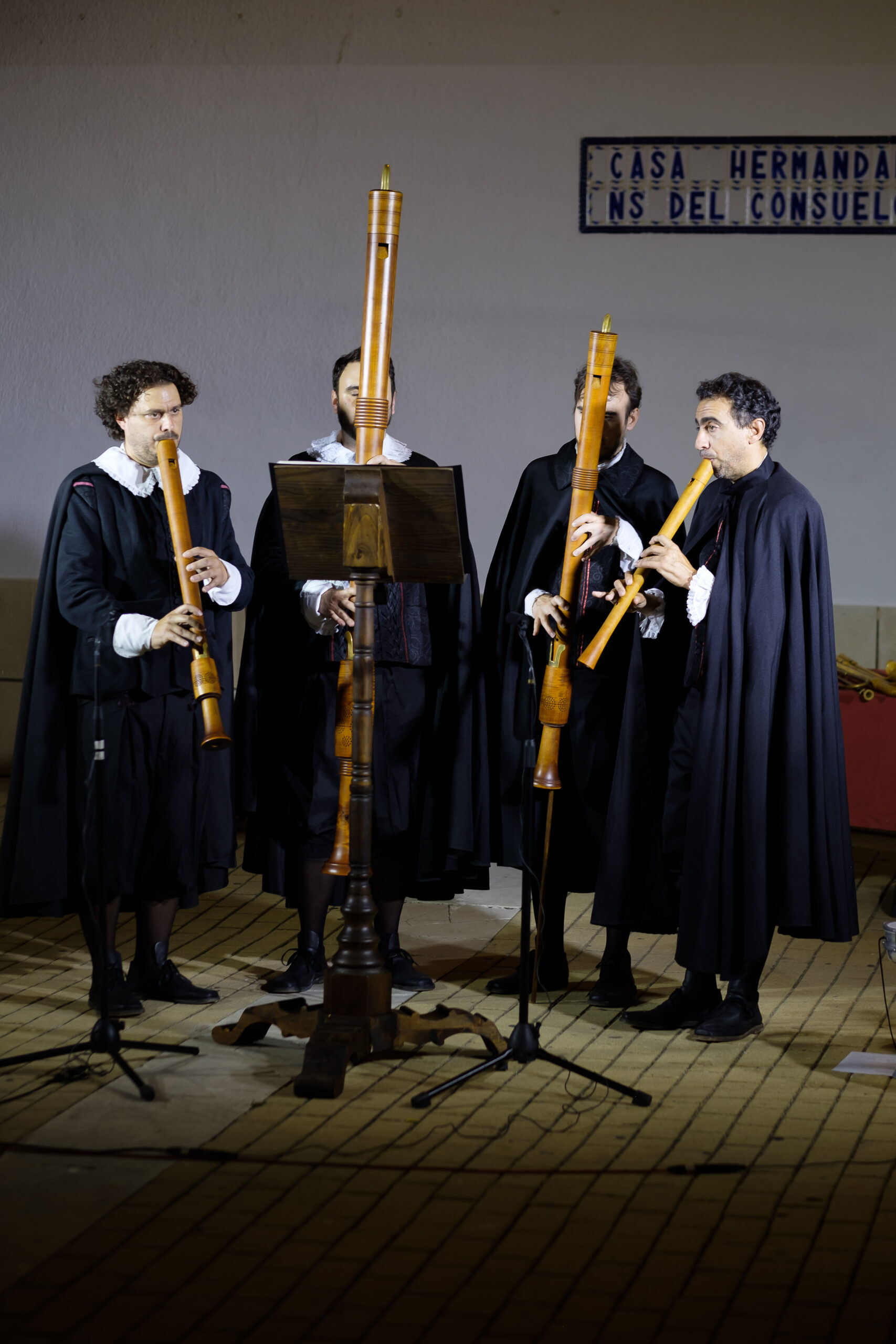
Information about the instruments played by the ministriles in the 16th century can be deduced from existing documentation in two types of sources: theoretical treatises and chapter acts. The instrumental setup is common in all ecclesiastical institutions of the time: shawms, cornetts, sackbuts, and dulcians. Additionally, in many cases (e.g., Seville and Toledo), there is specific information about the use of recorder and crumhorn ensembles, instruments less documented in other centers. All these instruments, with their respective families, form part of La Danserye’s instrumentarium. Additionally, and as an example of the use of instruments spread throughout Europe, muted cornetts have also been used, as they are mentioned in various cathedrals (Granada, Seville), and other traditional European instruments (tenor cornett, serpent, set of racketts, bagpipes, etc.).
The way these instrument ensembles are combined often results from the union of data from sources and the practice itself. In this case, we opted for the use of two types of combinations: pure and mixed. In the case of pure combinations, La Danserye uses various ensembles: recorders, crumhorns, racketts, dulcians. From a practical standpoint, the validity of using these ensembles as pure combinations of instruments from the same family, organized in ranges, has been demonstrated, as it achieves better sound blending. Additionally, in the case of recorders, different ranges have been used, from low to high, with an intermediate range.
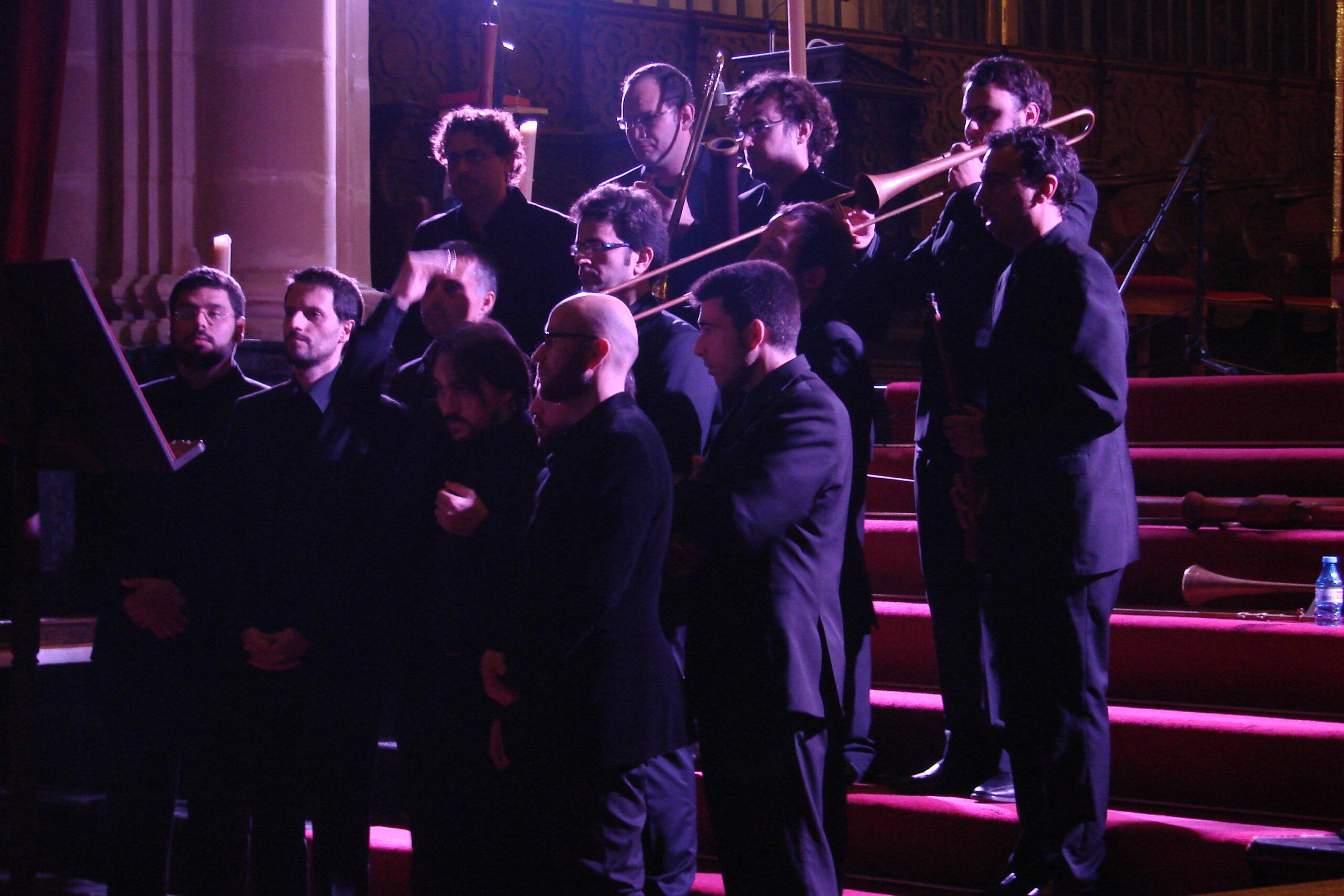
Regarding mixed combinations, they include a wide range where cornetts, shawms, sackbuts, and dulcians are used, considering the existence of different sizes for some families (mainly shawms and dulcians). In this sense, it is noteworthy the limited direct information from sources of this time, although there are references from later works documenting the existence, for example, of shawm ensembles whose natural bass corresponded to the sackbut (e.g., Nasarre, Escuela Música, 1723). Additionally, iconographic sources can provide general useful information in this regard, although care must be taken to ensure they depict real scenes and not symbolic allegories. The criteria commonly used in this respect are related to the overall sound balance of the ensemble in each case, using three general combinations, from highest to lowest sonority: 1) shawms and sackbuts (following Nasarre’s comments); 2) cornetts, shawms, and sackbuts; and 3) cornetts (muted cornetts), sackbuts, and dulcians. The use of these three mixed combinations, with their different variations using different ranges for each family, allows for a wide palette of timbres and colors, which the ministriles could use to change the sound register according to the needs of each specific case.
Ministriles, Multi-instrumentalist Musicians
The above would make no sense if not for the fact that the ministriles, during their training, were taught to play various instruments. There are numerous references demonstrating the “multi-instrumental” character of a ministril. There is a well-known edict by Francisco Guerrero for the Cathedral of Seville (1586) asking, among other things, that the same musicians change instruments:
“That in the Salves, the three verses played, one should be with shawms, another with cornetts, and another with recorders because always one instrument is annoying, and so they provided”.
This fact is of utmost importance to understand the great sonic versatility possessed by these ensembles of wind players. Additionally, mastering several instruments was highly valued in the competitions ministriles had to undergo to earn a position in any ecclesiastical center, giving them a greater advantage in the competition.
Interpretation Criteria
“…the measure is called the governance with which all music is coordinated and ruled, both singing and playing, giving it all the grace and being…” Thomas de Sancta María (Arte de Tañer Fantasía, 1565).
This phrase, taken from the treatise of Fray Thomas de Sancta María, serves as an introduction to the always difficult world of interpreting the music of this period today. The explicit absence of interpretative elements on the musical sources of this period (mainly indications of tempo and dynamics) has generated many doubts and controversies about the character, speed, and direction that the music of this time would have, among other things. However, theoretical sources are clear and unanimous regarding one of the most important elements in music: the measure.
La Danserye’s music interpretation is carried out directly from facsimiles of original sources, providing an opportunity to put into practice the theoretical concepts related to the measure found in the treatises of Sancta María (Arte de Tañer Fantasía, 1565), Fray Juan Bermudo (Declaración de Instrumentos Musicales, 1555), or Pietro Cerone (El Melopeo y Maestro, 1613), for example. In this way, the importance of maintaining a constant measure from the beginning to the end of each piece (without slowing down at the final cadence) has been confirmed, enhancing the rhythmic sense inherent in each musical work, which is vital for the adjustment of all voices, especially in more contrapuntal pieces. Ultimately, interpreting music from the original source obliges one to maintain a constant and marked measure (occasionally marked with a stick or even claps), a point frequently mentioned in theoretical sources:
“…the main thing a choirmaster should have is to know how to keep the measure, being wise and honest […] the measure should not be so fast as to cause confusion, nor so slow as to lose devotion. Never change the measure from slow to fast, nor the opposite, unless there is a particular necessity.”, cap. II, fol. XVIIII. Fray Juan Bermudo, Declaración de Instrumentos Musicales, 1555.
In conclusion, Ensemble La Danserye advocates for musical interpretation based on original sources as a way to reconstruct instrumental practice with the constraints derived from the source itself, and taking into account the theoretical concepts existing at the time.

