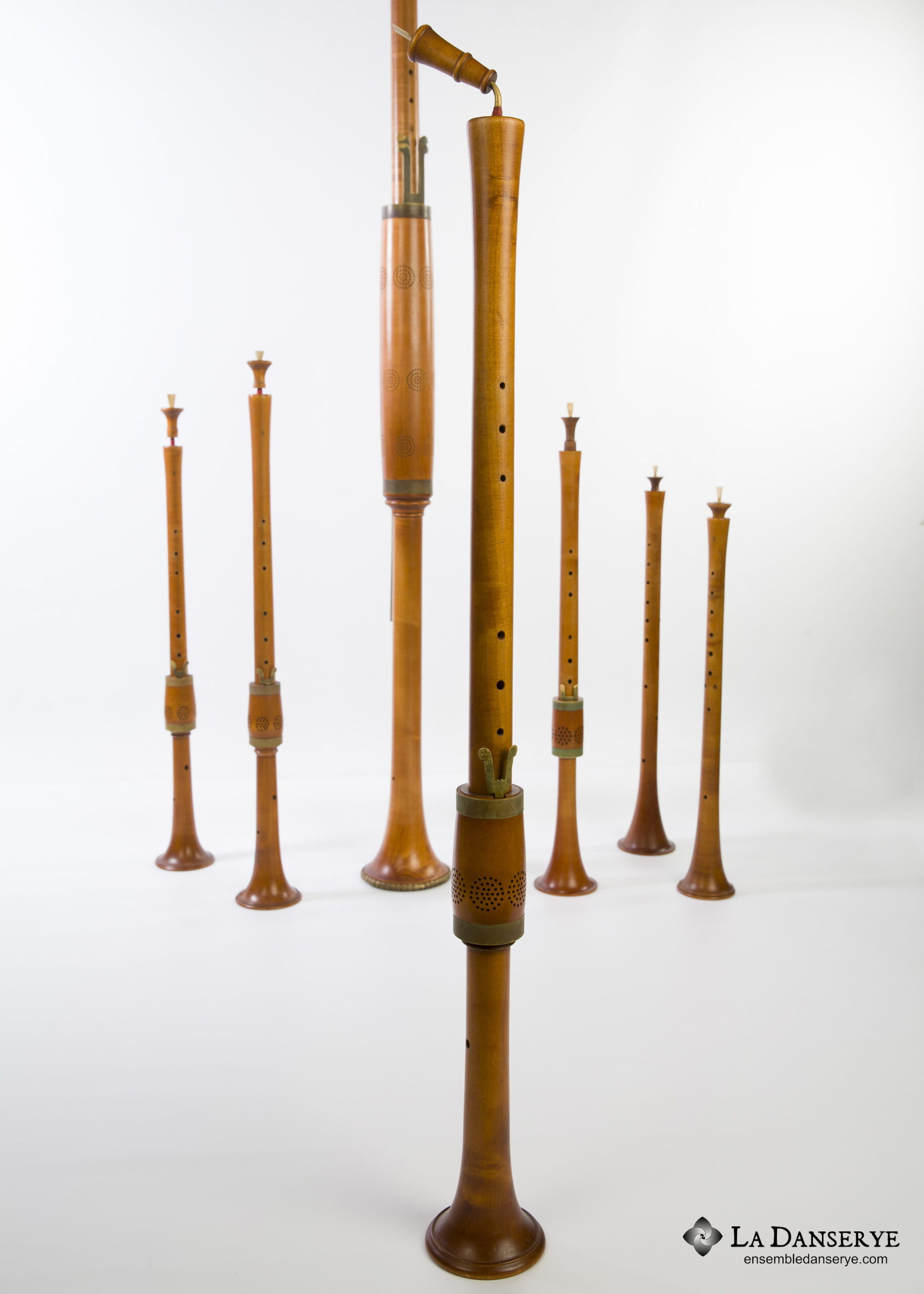
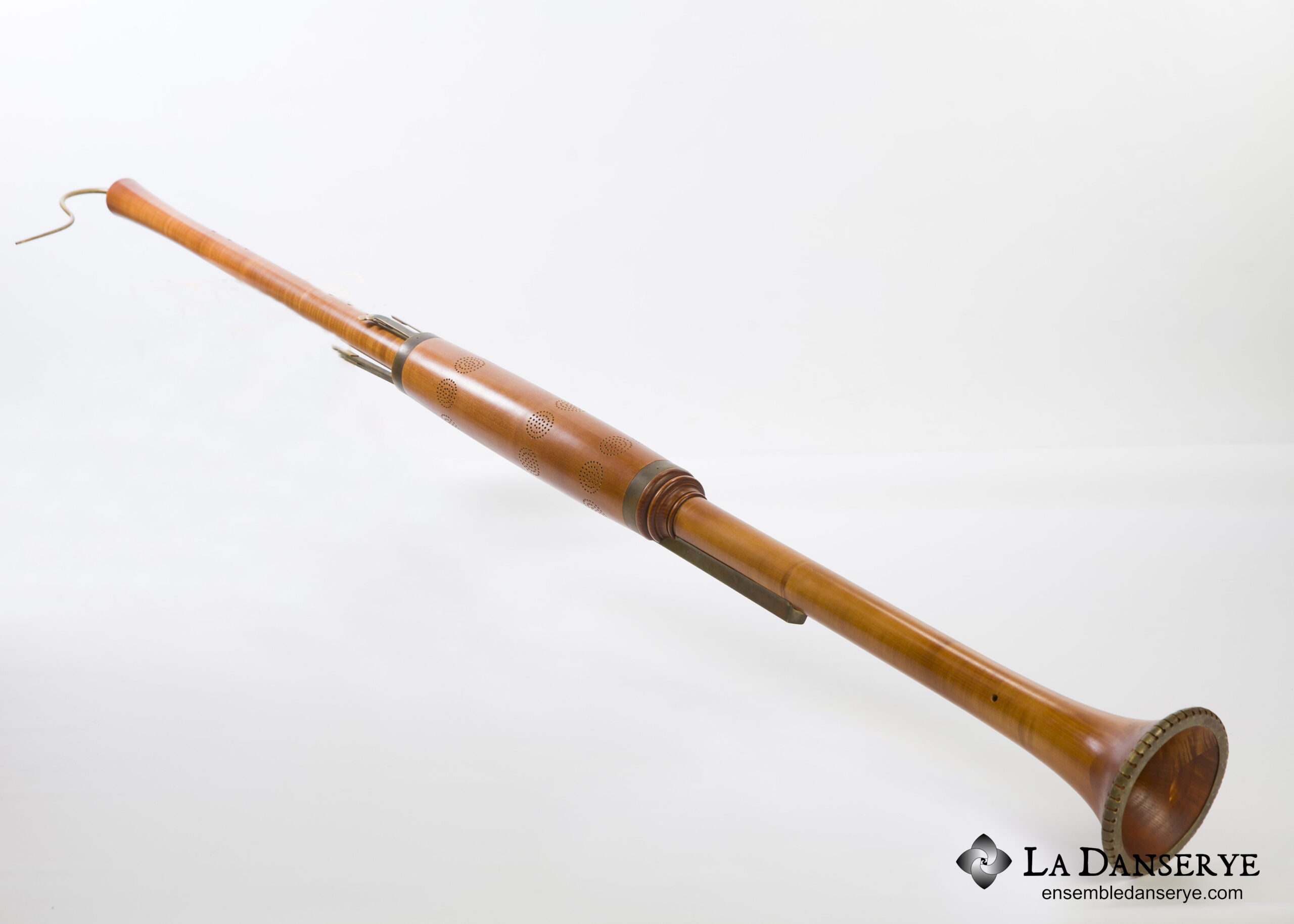
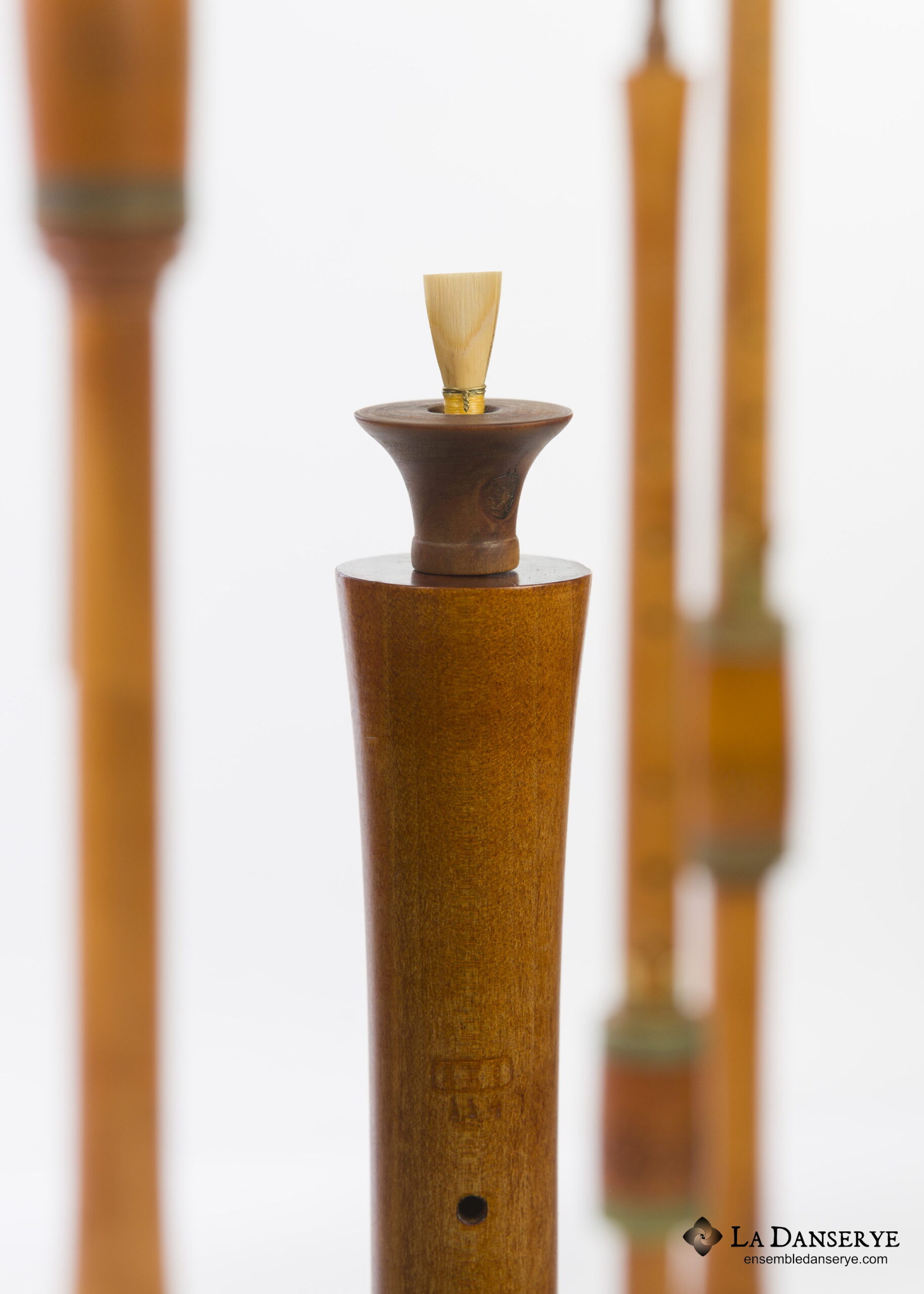
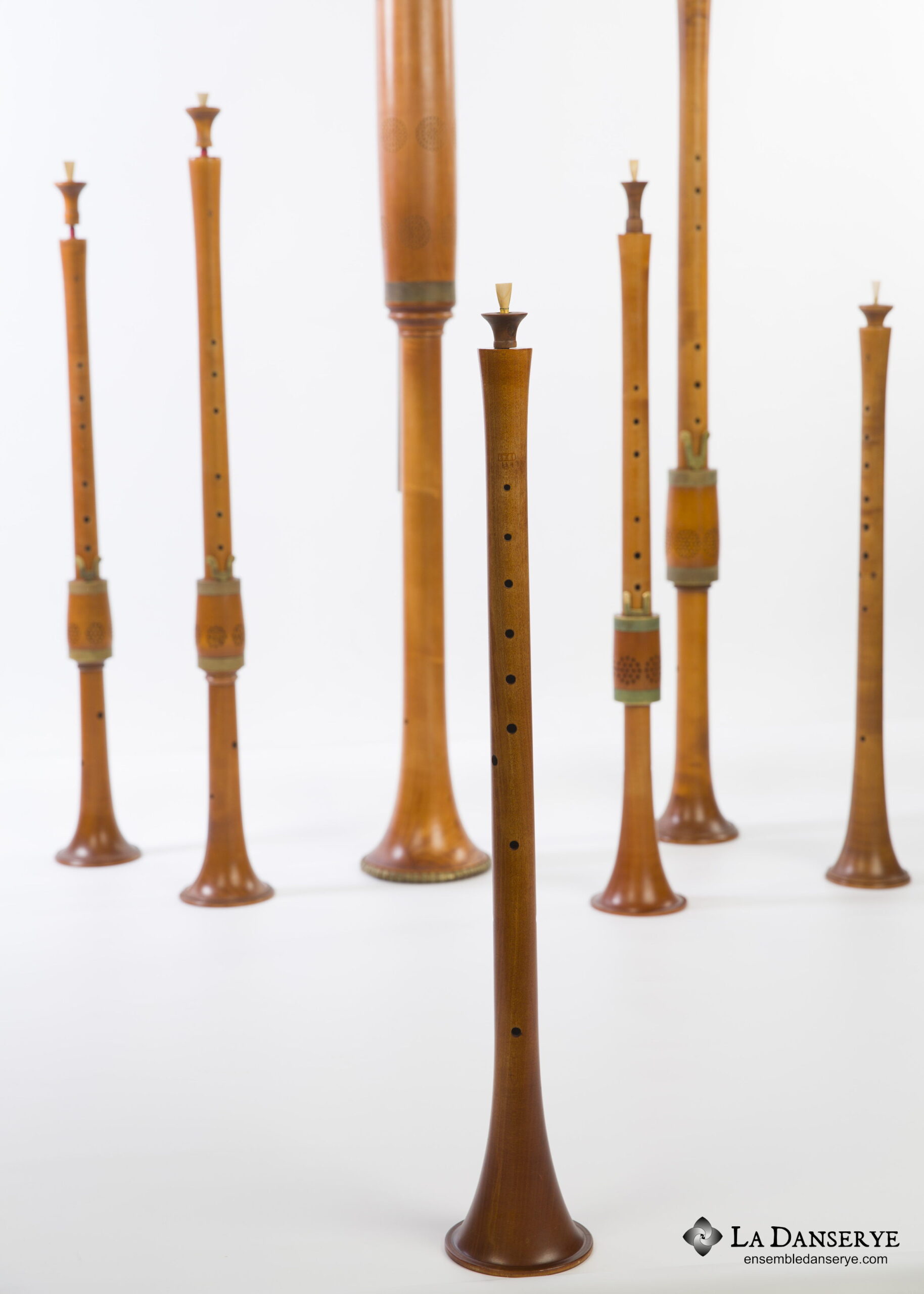
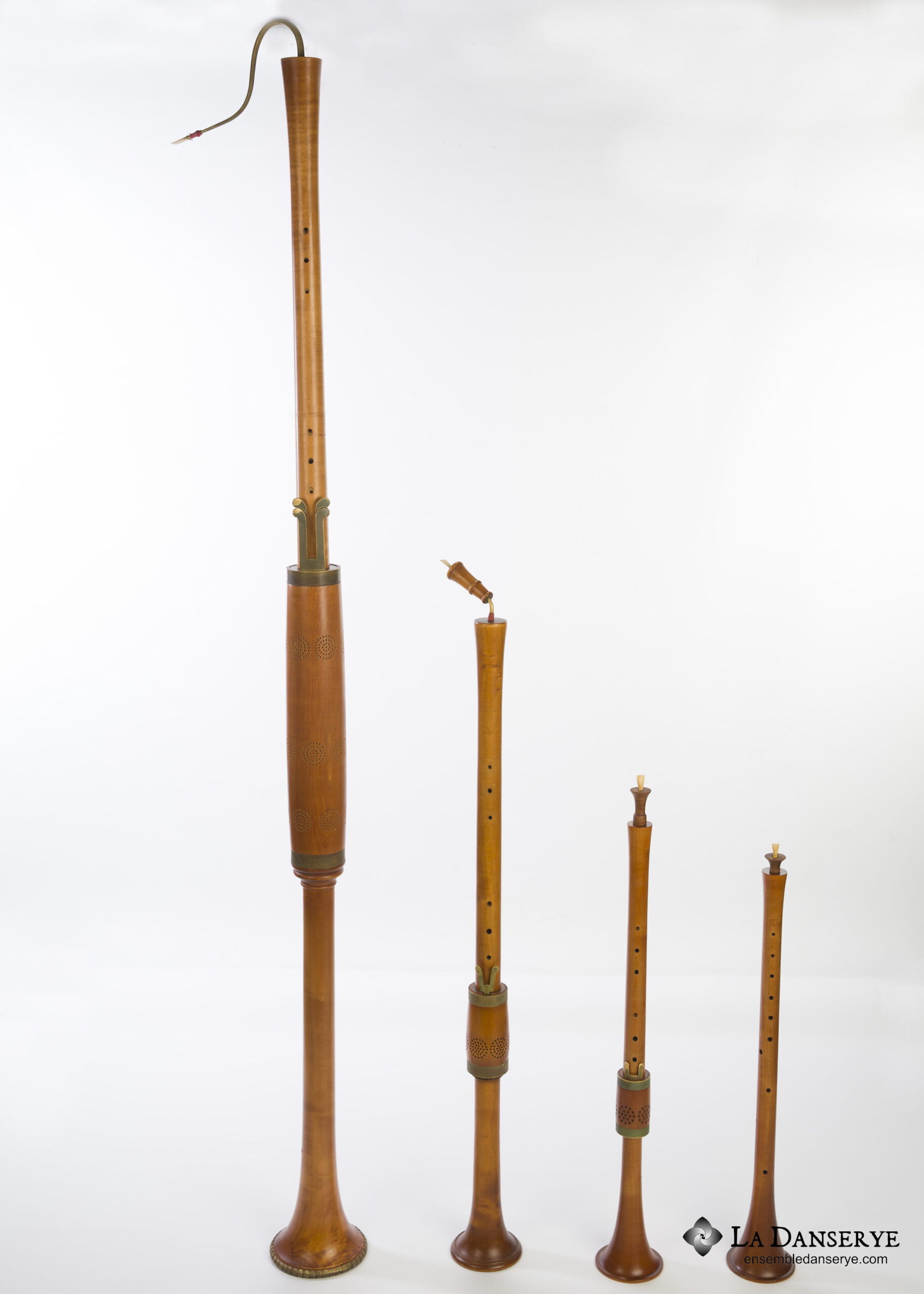
The shawms correspond to double-reed instruments that are the predecessors of both the oboe and English horn in classical music, as well as all dulzaina-type instruments in popular music. These are instruments that use a double reed to produce sound. The reed vibrates, and the sound propagates through the instrument. They are relatively simple instruments and only have one key for the last hole in the alto, tenor, and bass instruments. However, this simplicity makes them extremely difficult to play and tune, and due to these difficulties, they are relatively seldom used, especially mixed with voices.
Mouth instrument, like a straight trumpet without a bend, made of certain strong woods but crafted without splinters because almost all the fingers of both hands are used on the holes they have. Sebastián de Covarrubias, Tesoro de la lengua castellana o española, 1611.
They have a very penetrating sound, especially suitable for dance music, and although not widely accepted today, they were used in sacred music. They have been known since the Middle Ages, but were widely used during the Renaissance in the music chapels of Cathedrals and Collegiate Churches in Spain and throughout Europe, where they were essential instruments. It is therefore strange that they are not used now with choirs of voices when they were actually used to reinforce the voices themselves.
To play the shawm, hands and tongue are needed and even tight pants due to the danger of breaking…and so it is not bad advice for minstrels and even for singers to be collected and wrapped up… They are practiced in churches, for greater harmony of the music, which composed with the variety of artificial instruments and natural voices, makes it more harmonious and delightful… Pablo Nassarre, Fragmentos Músicos, 1683.
Manufacturers and instruments
- John Hanchet
- Sopranino in F, soprano in C, and alto in F, Spanish model from the 16th century, 440 Hz., London***** 2003
- Soprano in D, Alto in G, Alto in F, Tenor in C, Renaissance model, 440 Hz., London*****2004
- Robert Cronin
- Soprano in D, Alto in G, based on European models from the 16th century, 440 Hz., Menlo Park (California)*****2010-2011
- Christoph Schuler
- Bass in F, based on a model preserved in Salamanca (16th century), 440 Hz., Laghental (Switzerland)*****2008