
MISSA SUPER OCTO TONOS: Sebastián de Vivanco
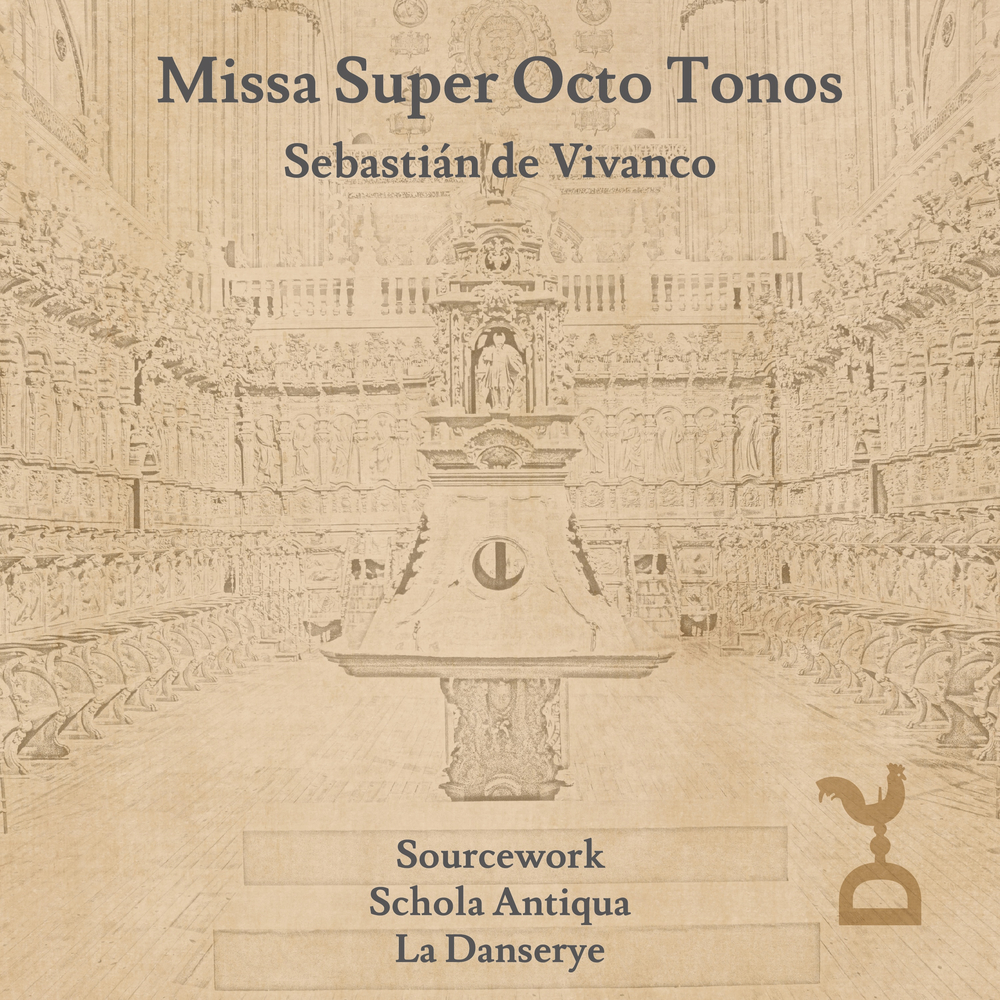
Discover the musical wealth of Spain’s Golden Age with Missa super octo tonos, the newest release from Salamanca Cathedral’s Cathedralis label. This recording forms part of an ongoing and important effort to bring renewed attention to the works of Sebastián de Vivanco (c. 1553–1622), a distinguished composer and former chapelmaster whose music has long been neglected. Vivanco’s compositions—and indeed all his printed output—were issued by the printer Susana Muñoz, who, together with her husband Artus Tavernier, established one of the leading presses for sacred music in Golden Age Spain. In this sense, the album also pays homage to her as a key figure in sixteenth-century Spanish music printing.
Following the success of an earlier volume, this release marks Cathedralis’s second recording devoted to Vivanco’s remarkable polyphony, performed with a strong commitment to historical practice. Central to the project is a unique collaboration between three internationally recognized ensembles: the eight vocal specialists of Sourcework, the plainchant ensemble Schola Antiqua, and the wind players of La Danserye. United by their approach of singing and playing directly from original choirbooks—without conductor, bar numbers, or rehearsal markings—they reconstruct a hypothetical liturgical celebration such as might have inaugurated the academic year in seventeenth-century Salamanca.
The performance reflects historical cathedral practices, where ministriles often reinforced or replaced vocal lines, enriching the texture with instruments such as shawms, sackbuts, and recorder consorts, particularly in the motets. This ambitious artistic vision has been recorded in the very setting where Vivanco lived and worked: the Old Cathedral of Salamanca, which also houses his remains.
The album features Vivanco’s Missa super octo tonos—a refined, expressive, and masterfully crafted composition—alongside a selection of motets, many of them recorded here for the first time. An essential contribution to Spain’s musical heritage, this recording combines scholarly rigor with outstanding artistic quality.

