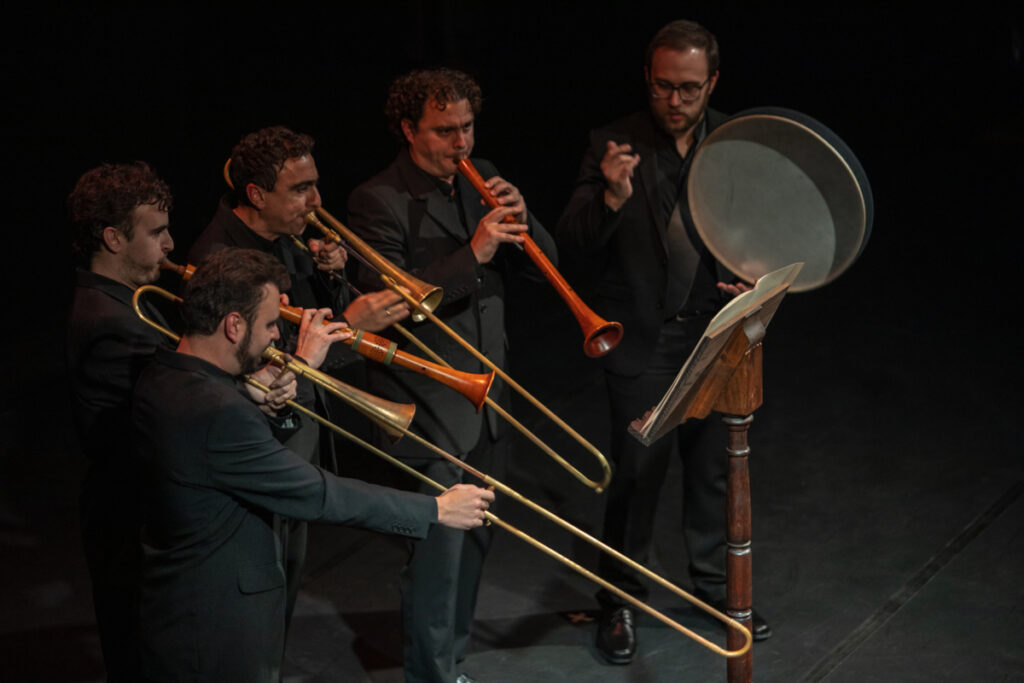
Vaya de fiesta. Baroque from Spanish America
In the cities founded in Latin America, civil and religious institutions, including music, reflected those in the Iberian Peninsula. Cathedrals and parishes had music chapels directed by a maestro, who was responsible not only for directing and selecting musical pieces but also for composing new works required throughout the liturgical year, especially carols for Christmas, for Corpus Christi, as well as for various feasts of the Virgin Mary and patron saints.
American maestros like Juan Gutiérrez de Padilla, Antonio de Salazar, and Juan García de Céspedes, who were maestros of the music chapels of Puebla and Mexico City, achieved a high level comparable to their peninsular colleagues. Although the Hispanic American repertoire of the 17th century was long disparaged for not conforming to the criteria of the Western musical canon, American archives contain thousands of works waiting to be justly recognized and valued by today’s public. The 17th-century Hispanic American music is attractive for its bright, popular, and ingenious character, influenced by the Golden Age theater and mestizo cultural elements, such as American-origin dances like the guaracha. “Vaya de fiesta” is a bridge that connects the past and present, showcasing the richness of these musics that resonated more than 300 years ago on both sides of the Atlantic and reminding us that Spanish cultural heritage is an inexhaustible source of inspiration and pride.